
Starting a business in Poland provides entrepreneurs with access to the European Union, a skilled workforce, and opportunities for international expansion. However, company registration involves several legal and administrative procedures, including choosing a business structure, preparing incorporation documents, and completing statutory registrations. Entrepreneurs can either manage these requirements independently or hire a professional company formation agent in Poland. Understanding the differences between these approaches can help business owners save time, control costs, and establish their companies with greater confidence.
Understanding Company Registration in Poland
Poland provides several business structures, including sole proprietorships, limited liability companies (Sp. z o.o.), joint-stock companies (S.A.), and partnerships. Each structure has different requirements concerning ownership, liability, management, and taxation. A Sp. z o.o. is particularly popular among foreign investors because it offers limited shareholder liability and relatively straightforward corporate governance.
Companies such as Sp. z o.o. and S.A. generally register with the National Court Register (KRS), while sole proprietorships use the Central Registration and Information on Business (CEIDG). The registration method depends on the chosen structure, shareholder arrangements, and required documentation. Entrepreneurs considering international expansion can explore UCI’s company formation services to understand the available options.
What Is Self-Registration in Poland?
Self-registration involves establishing a business without hiring a professional company formation agent. Entrepreneurs manage the incorporation process themselves, including preparing documents, arranging signatures, submitting applications, and responding to registration authorities. This approach provides direct control over the process and may reduce professional fees, but it requires a clear understanding of Polish registration procedures.
What Does a Company Formation Agent in Poland Do?
A company formation agent helps entrepreneurs coordinate the administrative and practical requirements of establishing a Polish business. Services may include selecting an appropriate company structure, preparing registration information, coordinating incorporation documents, arranging registered office services, and assisting with KRS applications. The exact support depends on the provider and the complexity of the proposed company.
For foreign entrepreneurs, professional assistance can be particularly valuable when dealing with overseas shareholder documentation, translations, identification requirements, and local administrative procedures. Agents may also coordinate with Polish lawyers, notaries, and accountants when specialist services are necessary. However, formal representation before registration courts is subject to Polish professional representation rules, so entrepreneurs should confirm the provider’s qualifications and service scope.
Company Formation Agent vs Self-Registration – Key Differences
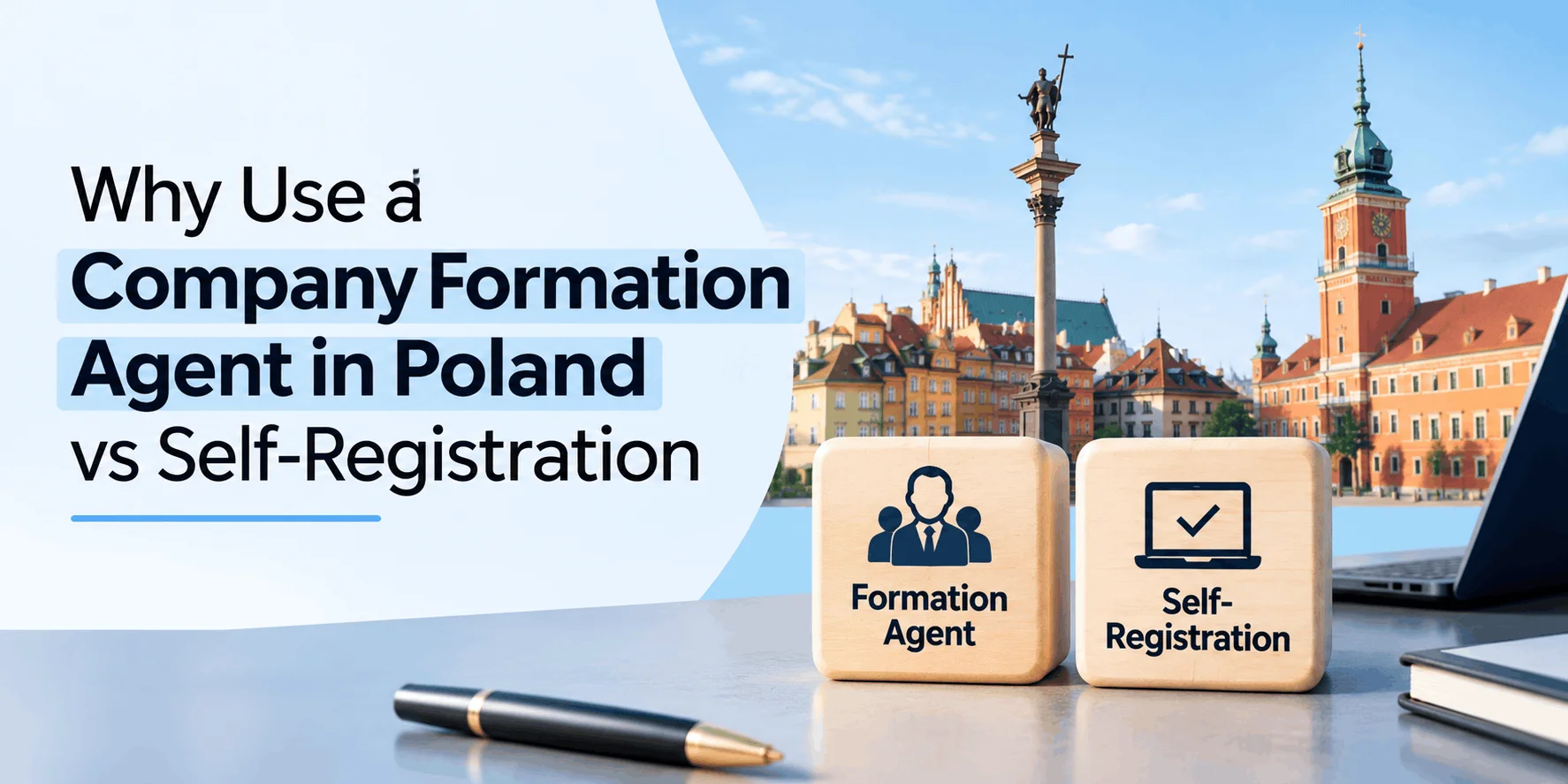
Both approaches can result in successful company incorporation, but they differ in administrative responsibility, cost, and professional support. Self-registration may suit entrepreneurs familiar with Polish procedures, while formation agents can provide additional assistance for foreign-owned or more complex businesses.
| Factor | Formation Agent | Self-Registration |
|---|---|---|
| Professional fees | Additional service charges | Generally lower |
| Documentation | Professional assistance | Prepared independently |
| Registration process | Coordinated support | Managed by founder |
| Compliance assistance | May be available | Arranged separately |
| Best suited for | Foreign or complex setups | Straightforward businesses |
The most appropriate option depends on the company’s ownership structure, available resources, and registration requirements. Entrepreneurs should compare the total costs and responsibilities rather than focusing exclusively on professional fees.
Benefits of Using a Company Formation Agent in Poland
Professional Knowledge and Documentation Support
Polish incorporation procedures involve specific requirements concerning company agreements, shareholders, management boards, and statutory registrations. An experienced formation agent can help entrepreneurs understand these requirements and coordinate the preparation of relevant documents. This assistance may reduce avoidable mistakes, particularly where applications involve foreign shareholders or additional corporate documentation.
Reduced Administrative Work
Registering a company independently requires time to understand the procedures, prepare applications, arrange signatures, and communicate with relevant authorities. A formation agent can coordinate many of these administrative activities, allowing entrepreneurs to concentrate on business planning, financing, and operational preparation.
Support for Foreign Investors
Foreign investors may face additional practical requirements involving identity verification, overseas corporate documents, translations, and electronic signatures. A company formation agent can help identify these requirements early and coordinate the necessary documentation before an application is submitted.
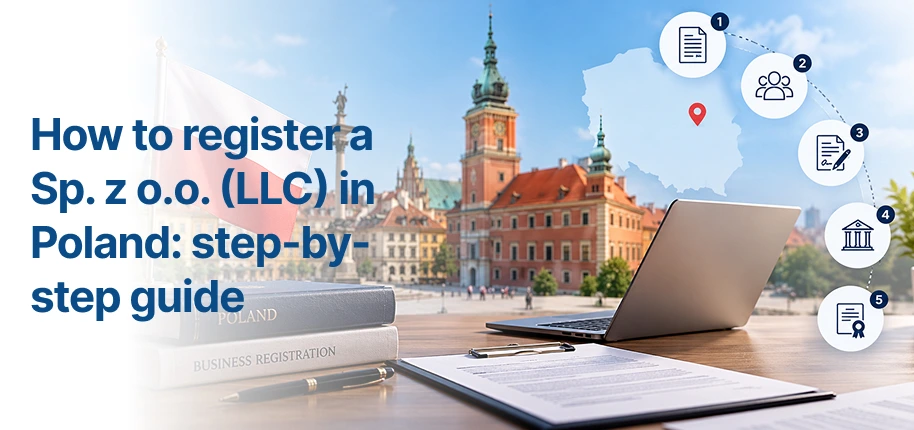
Also read – How to Register a Sp. z o.o. in Poland – Step-by-Step Guide.
Advantages of Self-Registration in Poland
Self-registration can be a cost-effective option for entrepreneurs establishing straightforward companies. By managing the incorporation process independently, founders can avoid additional formation agent fees while retaining direct control over documents, submissions, and correspondence. This approach may be particularly suitable for individuals familiar with Polish business regulations and electronic registration procedures.
The S24 system can simplify incorporation for eligible Sp. z o.o. companies using standardised agreements. However, businesses requiring customised shareholder arrangements, complex capital contributions, or additional legal provisions may need a different registration route. Entrepreneurs should therefore assess whether the savings justify the time and administrative responsibilities involved.
How to Register a Company in Poland – Step-by-Step
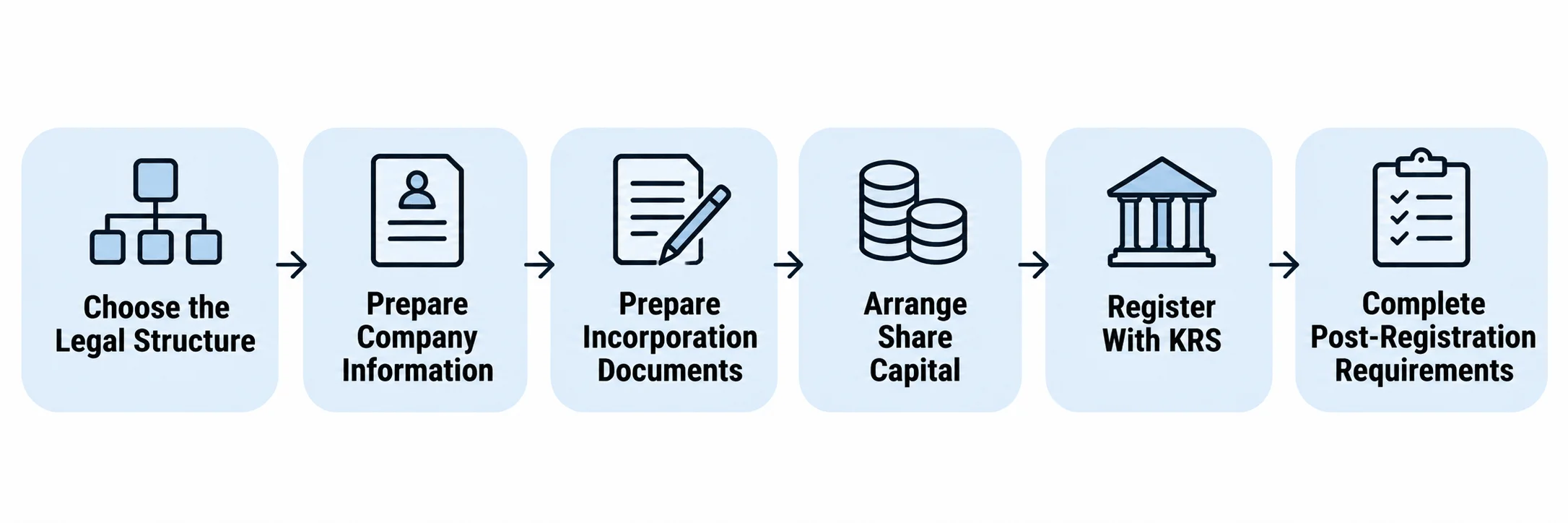
Whether entrepreneurs choose professional assistance or self-registration, the incorporation process generally involves six important stages. The exact requirements depend on the selected legal structure and registration method.
Step 1 – Choose the Legal Structure
Select a business structure based on ownership arrangements, liability protection, investment requirements, and long-term objectives. A Sp. z o.o. is commonly used for SMEs and foreign subsidiaries, while other structures may be appropriate for larger or more specialised businesses.
Step 2 – Prepare Company Information
Choose a suitable company name, determine the registered office, identify shareholders and management board members, and select the relevant business activities. Accurate information is essential because these details form the basis of the incorporation documents and registration application.
Step 3 – Prepare Incorporation Documents
Prepare the company agreement or articles of association according to the selected legal structure. Eligible businesses may use standardised S24 documents, while companies requiring customised provisions may need notarial incorporation and the appropriate electronic filing procedure.
Step 4 – Arrange Share Capital
Ensure the required capital contributions are arranged according to the company’s legal structure. For example, a Sp. z o.o. requires minimum share capital of PLN 5,000, although the timing and method of contributions depend on the applicable incorporation procedure.
Step 5 – Register With KRS
Submit the company registration application through the appropriate electronic system, ensuring that all required documents and signatures are included. The registration court reviews the application and may request corrections if the submission is incomplete or does not meet statutory requirements.
Step 6 – Complete Post-Registration Requirements
After incorporation, confirm the company’s identification details, assess VAT registration obligations, complete applicable beneficial ownership reporting, and arrange accounting and banking services. Additional requirements may apply depending on the business activity, employment arrangements, and regulatory obligations.
How Much Does Company Registration Cost in Poland?
Company registration costs depend on the legal structure, incorporation method, and professional services required. For a Sp. z o.o., minimum share capital is PLN 5,000, although this amount represents company capital rather than a government registration fee. Court registration fees are generally PLN 250 for eligible S24 applications and PLN 500 through the standard registration procedure, with other statutory charges potentially applying.
Additional expenses may include notarial services, document translations, registered office arrangements, accounting setup, and professional assistance. Self-registration can reduce initial costs by eliminating formation agent fees, while professional support may provide value through administrative coordination and documentation assistance. Entrepreneurs should request a complete breakdown of charges before selecting either approach.
How UCI Supports Company Formation in Poland
UCI helps international entrepreneurs understand company formation requirements and coordinate the administrative steps involved in establishing a Polish business. Our support can include company structure planning, incorporation documentation, registration coordination, and assistance with relevant post-registration requirements.
Through UCI’s European company formation services, businesses can access professional support when expanding into Poland and other European markets. We also assist with coordinating accounting, corporate administration, and ongoing compliance services according to each company’s operational needs.
Conclusion
Choosing between a company formation agent in Poland and self-registration depends on your business structure, available resources, and familiarity with Polish incorporation procedures. Self-registration may be suitable for straightforward businesses seeking to minimise professional fees, while formation agents can provide valuable administrative support for international or more complex company setups. Before making a decision, consider the total registration costs, documentation requirements, and ongoing compliance obligations. For professional assistance with establishing your Polish business, Contact Us to discuss your company formation requirements.