

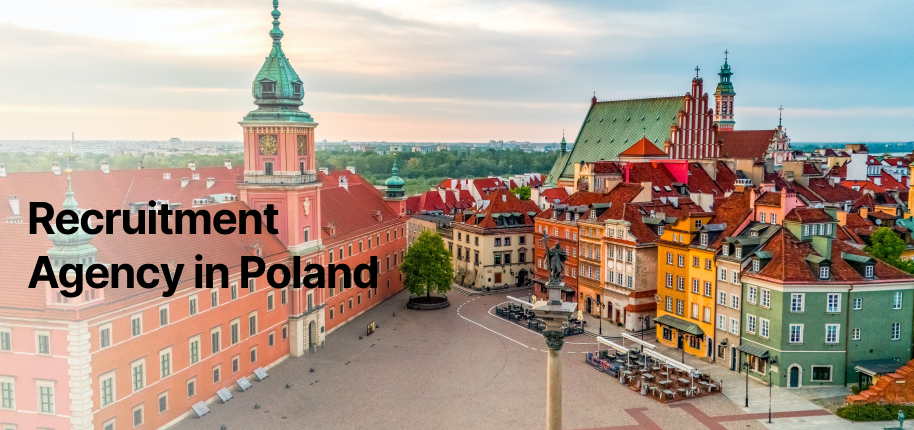
Poland’s employment sector is booming in 2025, making it a strategic location for launching a recruitment business. With rising demand for both temporary and specialist placements, companies aiming to start recruitment agency in Poland have a unique opportunity to tap into this growing market. This guide will walk you through licensing, tax compliance, labour law, and operational setup to ensure your agency is compliant and competitive.
The country’s favourable economic climate, combined with its position as a central EU hub, makes it ideal for both local and cross-border staffing operations. Entrepreneurs entering the market will benefit from a digitally connected workforce and a supportive regulatory environment. Whether you’re targeting tech professionals or blue-collar workers, Poland’s recruitment ecosystem offers long-term growth potential.
Why Choose Poland for Your Recruitment Business?
Poland is one of the EU’s fastest-growing economies, boasting a dynamic labour market. The demand for both skilled and unskilled labour spans industries such as IT, healthcare, construction, and logistics. Poland’s strategic position within the European Union provides access to neighbouring markets like Germany, the Czech Republic, and Slovakia. Additionally, the country boasts a highly educated, bilingual workforce, making it a top destination for staffing solutions.
Types of Recruitment Agencies Allowed in Poland
You can legally establish various types of recruitment businesses in Poland. These include
- Temporary Work Agencies (Agencja Pracy Tymczasowej) – Place workers on short-term assignments with third-party companies.
- Employment Placement and Outsourcing Firms – Help employers find long-term or project-based staff and manage HR functions.
- Executive Search Firms – Specialise in recruiting high-level professionals for leadership positions.
- Industry-Specific Recruiters – Focus on sectors such as IT, construction, or healthcare.
Each category may require different levels of licensing or compliance documentation.
Step-by-Step Guide to Starting a Recruitment Agency in Poland
Setting up a recruitment agency in Poland involves several key stages. Below is a breakdown
1. Choose a Legal Structure
The first step in setting up a recruitment agency in Poland is selecting an appropriate legal structure. Most foreign investors and local entrepreneurs opt for a limited liability company (sp. z o.o.) due to its flexibility and liability protection. This entity type also meets the eligibility criteria required for obtaining a recruitment licence in Poland.
2. Reserve a Company Name & Register with KRS
You must choose a unique company name and register it with the National Court Register (KRS). This process formalises your business and is a prerequisite for obtaining a NIP (tax number) and REGON (statistical number).
3. Obtain NIP, REGON, and a Polish business bank account
After KRS registration, your agency must apply for a NIP from the Tax Office and a REGON from the Central Statistical Office. A local business bank account is also required to process transactions, receive payments, and pay government fees and taxes. These numbers form the identity of your business in Poland.
4. Prepare and submit a licence application to the Marshal’s Office
You’ll need to submit a detailed application to the Marshal’s Office (Urząd Marszałkowski), the authority that grants recruitment licences. Your application must include a business plan, proof of insurance, and a certificate of no criminal record.
5. Meet office and staffing requirements
Recruitment agencies in Poland must operate from a physical office with proper signage. Additionally, civil liability insurance is mandatory to cover risks associated with staffing services. You must also employ or assign qualified personnel to run the agency’s daily operations.
6. Register for VAT and social security (ZUS)
Once the business is operational, VAT registration is needed if your turnover exceeds the national threshold or if you offer taxable services. You’ll also need to register with ZUS (Polish Social Security Institution) for both you and your employees. Non-compliance may lead to fines or audit issues.
7. Set up accounting, payroll, and reporting systems
Accurate bookkeeping is mandatory in Poland. You’ll need to establish a compliant accounting system to manage invoices, payroll, tax reporting, and social contributions. UCI offers complete accounting services tailored to recruitment businesses, making it easier to stay on top of financial obligations.
8. Comply with employment law and GDPR before operations begin
Before you start hiring or placing candidates, ensure that your contracts, policies, and candidate data practices comply with Polish labour law and the GDPR. Clear employment agreements, secure data handling, and transparent consent procedures are essential for maintaining compliance and avoiding penalties.
Legal Requirements and Company Formation
To legally start a recruitment agency in Poland, the most used business structure is a spółka z ograniczoną odpowiedzialnością (Sp. z o.o.), or limited liability company. This format is well-suited for foreign investors due to its flexibility, limited liability protection, and compliance with licensing requirements. Once the business structure is chosen, the next step is to register the company with the National Court Register (KRS). This involves reserving a unique company name and submitting formation documents.
After registration, you must apply for a NIP (tax identification number) from the Tax Office and a REGON (statistical number) from the Central Statistical Office. A local Polish business bank account is also required to manage transactions, government fees, and employee salaries. Additionally, recruitment agencies must have a physical office in Poland with appropriate signage, which is a mandatory condition for licensing. It’s also essential to secure civil liability insurance to cover the operational risks associated with staffing services.
Once your agency is operational, you will need to register for VAT if your turnover exceeds the national threshold, and for ZUS (Social Security) to meet obligations for both employers and employees. Establishing reliable accounting, payroll, and reporting systems is also essential. Finally, your business must ensure full compliance with Polish labour laws and GDPR, including clear employment contracts, secure data management practices, and transparent privacy policies.
Table – Business Setup & Licensing Milestones
| Step | Requirement | Issuing Authority |
| Reserve Company Name | Unique Business Name | National Court Register |
| Form Legal Entity | Sp. z o.o. with Articles | KRS |
| Tax & Statistics IDs | NIP, REGON | Tax Office, GUS |
| Open Business Bank Account | Local Polish Bank | Any Licensed Bank |
| Apply for a Recruitment Licence | Licence + Documentation | Marshal’s Office |
| VAT & ZUS Registration | Tax + Social Contributions | Tax Office & ZUS |
Taxation and Accounting Obligations
Polish companies must pay
- Corporate Income Tax (CIT) 9% (small businesses) or 19% (standard rate)
- VAT 23% for most recruitment and outsourcing services
- ZUS Contributions For all employed workers, including pension, health, and social insurance
You must also keep detailed accounting records and submit annual financial statements. Hiring a local accountant or using UCI’s accounting and payroll services ensures complete compliance.
Employment and Labour Law Compliance
You must comply with the Polish Labour Code, which governs
- Fixed-term and open-ended employment contracts
- Minimum wage regulations
- Working time limits (e.g., 8 hours/day or 40 hours/week)
- Paid holidays, sick leave, and maternity benefits
- Anti-discrimination and equal pay requirements
Recruitment agencies are responsible for all personnel placed under their employment contracts and must register them with ZUS.
Data Protection and GDPR Requirements
Handling candidate data means full GDPR compliance. Key requirements include
- Privacy Notices – Clearly displayed and written in Polish
- Consent Forms – For data processing and retention
- Data Security – Secure systems for storage and deletion
- Cross-Border Transfers – Use of Standard Contractual Clauses (SCCs) if sending data outside the EU
UCI offers GDPR audits, documentation, and advisory services.
Insurance and Risk Management
Recruitment businesses must have
- Civil Liability Insurance – Covers business operations
- Professional Indemnity Insurance – For executive search firms
- Accident Insurance – If you hire and place temporary staff
These policies protect against claims arising from negligence, workplace accidents, or non-compliance. UCI helps assess your insurance needs and source the right cover.
Common Challenges and How to Overcome Them
Starting a recruitment agency in Poland can come with hurdles
- Language Barriers – Most authorities operate in Polish. UCI provides bilingual support.
- Delays in Licensing – Bureaucratic processes can significantly slow down the licensing process. Partnering with experts speeds things up.
- Stiff Competition – Focus on niche industries or bilingual placements to stand out.
- Labour Inspections – Keep contracts, payroll, and tax records up to date.
Working with UCI’s Polish market team helps you avoid setbacks and stay compliant.
How UCI Can Help?
UCI provides full-spectrum support to start a recruitment agency in Poland, including
- Business registration and name reservation
- Licence application and office setup
- VAT registration and ZUS onboarding
- Employment contract templates and GDPR documentation
- Accounting, tax filing, and HR support
Our bilingual consultants and local partnerships ensure your business starts strong and scales smoothly. We also offer tailored advisory for niche recruitment sectors such as IT, healthcare, and construction. With UCI, you gain a reliable partner to navigate Polish regulations and grow your agency with confidence.
Conclusion
Launching a recruitment agency in Poland in 2025 requires legal formation, tax compliance, licensing, and HR readiness. By following each step from company registration to obtaining a Marshal’s Office licence, you can build a solid foundation. With rising employment demand across multiple sectors, the opportunity is ripe for growth. UCI is here to guide you through the process from setup to the whole operation so you can focus on what matters most: connecting top talent with top employers. Success in Poland’s competitive recruitment market also hinges on ongoing compliance, transparent processes, and a strong local presence. With the right strategy and expert guidance, your agency can thrive from day one. Let UCI be your trusted partner in building a sustainable and scalable recruitment business in Poland.