


Choosing the right jurisdiction is one of the most important decisions when expanding your business internationally. One of the first questions many entrepreneurs and investors ask is whether an offshore or onshore company is the better choice. Both structures offer distinct advantages, but they are designed for different business objectives. While offshore companies are often chosen for international operations, asset protection, or holding investments, onshore companies are typically established to trade within a country’s domestic market and build a local presence.
The right option depends on factors such as your target markets, business activities, tax obligations, regulatory requirements, and long-term growth plans. This guide explains the key differences between offshore vs onshore company formation, compares their advantages and limitations, and helps you determine which structure best suits your business.
What Is an Offshore Company?
An offshore company is a business entity incorporated in a jurisdiction outside the country where its owners primarily reside or conduct business. Offshore jurisdictions are often chosen because they provide business-friendly regulations, flexible ownership structures, and efficient company administration for international operations.
Offshore companies are commonly used for
- International trading
- Holding investments
- Intellectual property ownership
- Global consulting services
- Asset protection
- International wealth management
Contrary to common misconceptions, offshore companies are not illegal. When properly established and operated in compliance with applicable laws, they are legitimate business structures used by companies and investors worldwide.
However, businesses must always comply with tax reporting and regulatory requirements in every country where they operate or where the owners are tax residents.
What Is an Onshore Company?
An onshore company is incorporated within the country where it conducts its primary business activities. These companies typically trade directly with local customers, employ local staff, maintain physical operations, and comply with domestic corporate laws and tax regulations.
Onshore companies are commonly established by businesses that want to
- Operate within the local market
- Build relationships with domestic customers
- Access local financing
- Employ local workers
- Participate in government contracts
- Develop long-term commercial operations
Most businesses serving a country’s domestic economy will establish an onshore company.
Offshore vs Onshore Company Formation
Although both structures create a legally recognised business entity, they differ significantly in how they operate, who they serve, and the regulatory environments they are designed for. Understanding these differences helps businesses choose the structure that best supports their objectives.
Key Differences Between Offshore and Onshore Company Formation
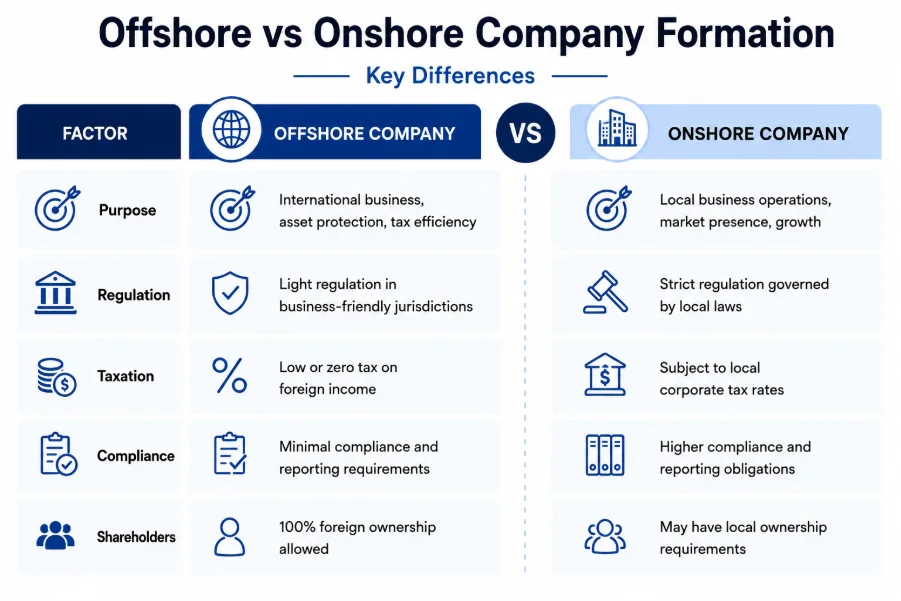
Business Activities
Perhaps the biggest difference lies in where business is conducted.
Offshore Company
Generally established to conduct business internationally rather than within the jurisdiction where it is incorporated.
Common uses include
- International consulting
- Global trading
- Holding investments
- Licensing intellectual property
- International asset ownership
Onshore Company
Primarily operates within the country where it is registered.
Typical activities include
- Selling products locally
- Providing domestic services
- Hiring local employees
- Opening physical offices
- Working with local suppliers
Tax Environment
Tax treatment varies significantly between jurisdictions and should always be assessed based on local laws and the company’s actual business activities.
Offshore Company
Some offshore jurisdictions offer competitive corporate tax environments or territorial tax systems. However, businesses may still have reporting or tax obligations in other countries depending on where they operate and where their owners are tax residents.
Onshore Company
Generally subject to domestic corporate tax rules, VAT or GST where applicable, payroll taxes, and other local reporting obligations.
Businesses should always seek professional tax advice before selecting a jurisdiction.
Ownership and Management
Ownership requirements differ across jurisdictions.
Offshore Company
Many offshore jurisdictions allow
- 100% foreign ownership
- Flexible shareholder structures
- International directors
- Remote company management
Onshore Company
Requirements depend on local regulations and may include
- Resident directors
- Local representatives
- Industry-specific ownership rules
- Licensing approvals
Regulatory Compliance
Every company has ongoing compliance responsibilities.
Offshore Company
Requirements may include
- Annual renewals
- Beneficial ownership reporting
- Corporate record maintenance
- Economic substance requirements (where applicable)
Onshore Company
Typically requires
- Annual accounts
- Tax returns
- Financial reporting
- Employment compliance
- Industry licences
- Local regulatory filings
Compliance obligations vary considerably between jurisdictions. Businesses should assess these requirements before incorporation to ensure ongoing compliance.x
Banking
Business banking should be considered before incorporation.
Offshore Company
International banking is available in many jurisdictions, although financial institutions often carry out extensive due diligence and Know Your Customer (KYC) checks before opening accounts.
Onshore Company
Businesses generally have access to local banking services, payment facilities, business loans, and domestic financial products that support day-to-day operations.
Reputation
Business reputation depends more on compliance and transparency than whether a company is offshore or onshore.
Offshore Company
Well-regulated offshore jurisdictions can provide legitimate and respected business structures for international operations. However, businesses should ensure they operate transparently and comply with all relevant legal and tax obligations.
Onshore Company
Onshore companies are often preferred when building a strong local presence, working with domestic customers, or participating in government and regulated industries.
Costs
Formation and ongoing costs vary widely depending on the jurisdiction.
Businesses should compare
- Incorporation fees
- Annual renewal costs
- Registered office fees
- Accounting requirements
- Compliance costs
- Licensing fees
Choosing the lowest-cost jurisdiction is not always the best long-term decision if it does not support your business objectives.
Market Access
The location of your customers plays a major role in deciding between offshore and onshore company formation.
Offshore Company
Often suitable for businesses serving international clients across multiple countries without requiring a significant physical presence in a single market.
Onshore Company
Generally the better choice for businesses that want to establish a local presence, build relationships with domestic customers, and operate directly within a country’s economy.
Advantages of Offshore Company Formation
Offshore company formation can provide several benefits for businesses operating internationally. However, these advantages depend on the jurisdiction chosen and how the company is structured and managed.
International Business Flexibility
Offshore companies are often designed to support businesses serving clients across multiple countries. This makes them suitable for companies that operate internationally rather than within a single domestic market.
Flexible Ownership Structures
Many offshore jurisdictions allow 100% foreign ownership and offer flexible shareholder and director requirements, making it easier for international entrepreneurs to establish and manage their businesses.
Asset Protection
Some businesses use offshore companies to hold investments, intellectual property, or other assets as part of a wider corporate structure. Appropriate legal and tax advice should always be obtained before implementing asset protection strategies.
Efficient Company Administration
Many offshore jurisdictions have streamlined incorporation procedures and straightforward ongoing administrative requirements, allowing businesses to focus on growth while remaining compliant.
Advantages of Onshore Company Formation
Onshore companies are often the preferred choice for businesses planning to establish a strong local presence and build long-term operations.
Access to Local Markets
An onshore company allows businesses to trade directly with domestic customers, suppliers, and partners while building credibility within the local market.
Greater Business Credibility
Many customers, financial institutions, and government organisations prefer working with locally incorporated businesses, particularly in regulated industries.
Access to Local Banking and Finance
Onshore companies generally have easier access to domestic banking services, business loans, and other financial products that support daily operations and expansion.
Long-Term Growth Opportunities
Businesses intending to hire employees, lease office space, or expand their physical operations typically benefit from an onshore company structure.
Offshore vs Onshore Company Formation – Which Is Right for Your Business?
There is no universal answer. The right structure depends entirely on your business model, where your customers are located, and your long-term objectives.
An Offshore Company May Be Suitable If You
- Operate primarily with international clients.
- Run an international trading or consulting business.
- Want a holding company for investments or intellectual property.
- Require a flexible ownership structure.
- Do not need a physical presence in the incorporation jurisdiction.
An Onshore Company May Be Suitable If You
- Plan to trade within a specific country.
- Need to employ local staff.
- Require access to domestic banking and financing.
- Want to establish a recognised local presence.
- Operate in a regulated industry that requires local licensing.
Before making a decision, businesses should evaluate not only tax considerations but also compliance obligations, banking access, licensing requirements, and future expansion plans.
Common Misconceptions About Offshore Companies
There are many misconceptions surrounding offshore company formation. Understanding the facts can help businesses make informed decisions.
Offshore Companies Are Illegal
False. Offshore companies are legal business structures when established and operated in compliance with applicable laws and reporting requirements.
Offshore Companies Pay No Tax Anywhere
False. Tax obligations depend on the jurisdiction of incorporation, where business activities take place, and the tax residency of the owners. Businesses must comply with all relevant tax laws.
Offshore Companies Have No Reporting Requirements
False. Many offshore jurisdictions require annual renewals, beneficial ownership reporting, accounting records, or economic substance compliance.
Onshore Companies Are Always Better
Not necessarily. An onshore company is ideal for businesses operating locally, while an offshore company may be more appropriate for businesses with international operations. The best choice depends on your specific business objectives.
How UCI Can Help?
Choosing between offshore and onshore company formation requires careful consideration of your business goals, regulatory obligations, and long-term growth strategy. At UCI, we help entrepreneurs, startups, SMEs, and international businesses establish companies across 100+ countries. Our experienced team provides tailored guidance to help you select the most suitable jurisdiction and business structure based on your operational needs.
Our services include
- Offshore and onshore company formation
- Branch office and subsidiary setup
- Ready-made company solutions
- Registered office services
- Business licensing and permits
- Accounting and tax support
- Legal and compliance assistance
- Bank account opening support
- Trademark registration
- Ongoing corporate services
From selecting the right jurisdiction to managing ongoing compliance, UCI provides end-to-end support throughout your international expansion journey.
Conclusion
Choosing between offshore vs onshore company formation is not about deciding which option is better overall, it’s about determining which one best supports your business strategy. An offshore company can offer flexibility for international operations, while an onshore company is often better suited for businesses serving local markets and establishing a physical presence.
Factors such as business activities, compliance requirements, banking access, market reach, and long-term growth objectives should all be considered before making a decision. By carefully evaluating your options and seeking professional guidance, you can choose a structure that supports sustainable growth while ensuring compliance with applicable regulations.