

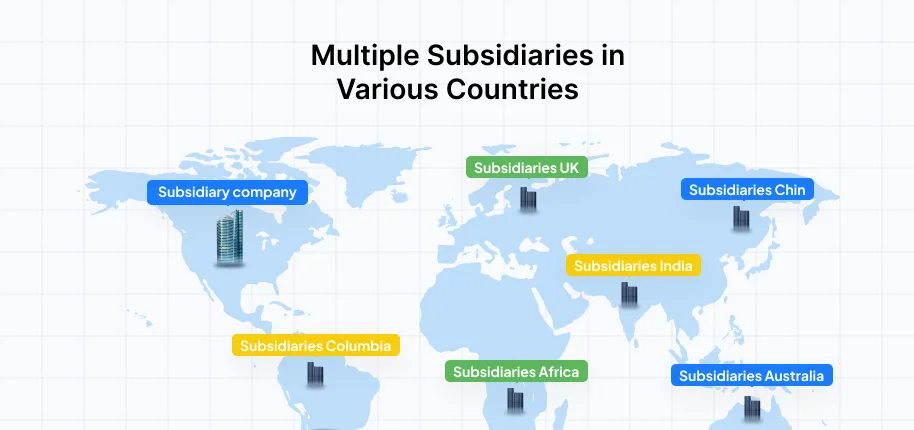
Operating multiple subsidiaries across different countries is a powerful growth strategy but it requires expert planning, legal precision, and operational alignment. At UCI, we help multinational businesses set up, structure, and manage subsidiaries efficiently across diverse jurisdictions, whether you’re expanding into established markets like the UK and USA or fast-growing regions such as India and Hong Kong.
On the contrary, if you’re entering new markets, optimizing supply chains, or enhancing tax strategies, we provide the expertise to make your international expansion seamless and successful. Our services also cover key global hubs, including Australia and major European jurisdictions, ensuring full compliance and long-term operational stability.
Why Set Up Subsidiaries in Multiple Countries?
Global subsidiaries can give businesses access to local markets while creating a stronger foundation for international growth. Companies planning to establish operations across several jurisdictions can work with UCI to navigate the corporate and administrative requirements associated with international expansion.
- Access to Local Markets – Tailor your offerings to meet regional customer needs and strengthen market penetration.
- Regulatory Flexibility – Ensure full compliance with local legal, tax, and employment regulations across regions like Europe, the US, and Asia.
- Operational Agility – Respond faster to market trends, emerging opportunities, and economic shifts.
- Risk Diversification – Spread business risk across multiple economies to enhance stability.
- Brand Growth – Establish deeper connections with customers through localized operations and adaptation.
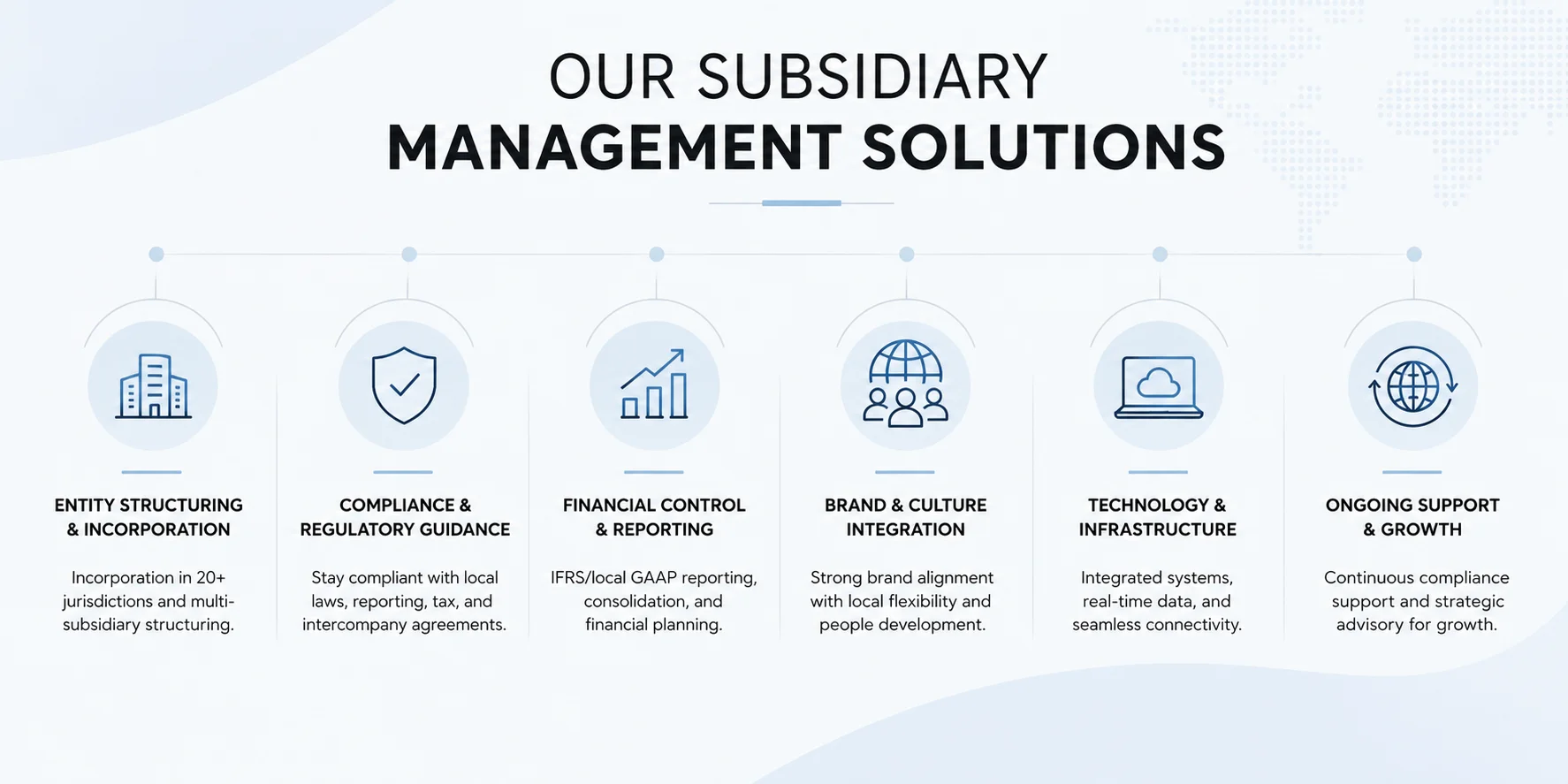
Our Subsidiary Management Solutions
Establishing subsidiaries in different jurisdictions requires careful coordination of ownership, incorporation, local requirements, and ongoing administration. UCI’s subsidiary formation services can support businesses establishing local entities as part of a wider international corporate structure.
Entity Structuring & Incorporation
- Incorporation in over 20 jurisdictions
- Legal framework and ownership setup
- Multi-subsidiary organizational planning
Compliance & Regulatory Guidance
- Local tax, labour, and commercial law compliance
- Ongoing legal and financial reporting
- Transfer pricing and intercompany agreements
Financial Control & Reporting
- International accounting and auditing standards (IFRS/local GAAP)
- Consolidated reporting and benchmarking
- Currency risk and capital allocation planning
Brand & Culture Integration
- Unified brand identity with local flexibility
- Internal communications alignment
- Cultural training and leadership development
Technology & Infrastructure
- Cloud-based ERP integration across regions
- Data synchronization and cross-border dashboards
- Real-time communication platforms
Key Challenges We Help You Overcome
Running subsidiaries in multiple countries presents significant challenges. UCI helps you mitigate
- Complex legal and regulatory environments
- Cross cultural and language barriers
- Time zone coordination and decision delays
- Brand consistency vs. local market needs
- Cost control and currency volatility
Who do We Work With?
International expansion looks different for every business. Some companies need to establish their first overseas subsidiary, while others are already managing multiple entities across different jurisdictions. UCI works with businesses at various stages of international growth, helping them create structures that support their operational and long-term objectives.
Our clients include
Multinational Corporations Expanding Internationally
Established businesses entering new markets across Europe, the UK, the UAE, and other international jurisdictions. They may require well-coordinated subsidiary structures to support regional operations while maintaining effective group-level oversight.
SMEs Scaling Their Operations
Growing businesses looking to establish a local legal presence in new markets without creating unnecessary administrative complexity. A suitable subsidiary structure can help SMEs operate closer to their customers, suppliers, and local business partners.
Start-ups Building Strategic Global Footprints
Start-ups planning international growth often need flexible and efficient corporate structures that allow them to enter new markets while keeping their initial operational and administrative requirements manageable.
Holding Companies Managing Multiple Investments
Investment groups and holding companies with subsidiaries in different countries may need an organised structure for managing ownership, reporting, compliance, and relationships between multiple entities.
Businesses Restructuring Existing International Operations
Companies with an established presence in several countries may also need to review and reorganise their existing subsidiary structures as their markets, ownership arrangements, or business strategies evolve.
Why Choose UCI?
Expanding into multiple countries requires more than simply establishing new entities. Businesses need a reliable approach to managing different jurisdictions, regulatory requirements, financial considerations, and ongoing corporate obligations. UCI supports businesses throughout their international expansion journey with practical, coordinated guidance.
Global Reach with Local Expertise
Gain access to international business support combined with an understanding of local regulations, market practices, and jurisdiction-specific requirements. This helps businesses establish and manage subsidiaries more effectively across different countries.
End-to-End Subsidiary Lifecycle Support
From initial planning and incorporation to ongoing administration, compliance, and changes within the corporate structure, businesses can maintain a more organised approach to managing their subsidiaries throughout their entire lifecycle.
Custom Compliance and Financial Planning
Every international business structure has different requirements. UCI takes into account factors such as jurisdiction, business activity, reporting obligations, taxation, and financial structure to help businesses develop practical and sustainable plans.
Trusted by Businesses in 20+ Countries
Experience supporting businesses across more than 20 countries provides valuable insight into the practical challenges associated with international expansion and multi-jurisdictional structures.
Advisory Rooted in Real-World Expansion Strategies
International expansion involves more than theoretical planning. UCI focuses on practical strategies that consider the operational, regulatory, financial, and administrative realities businesses face when establishing a presence in new markets.
Centralised vs. Localised Subsidiary Management
Managing subsidiaries across several countries requires businesses to balance central oversight with local decision-making. While the parent company may establish common standards for finance, reporting, governance, and risk management, each subsidiary must also comply with the laws and business practices of its own jurisdiction.
A well-structured approach can help businesses
- Maintain consistent financial and operational reporting
- Monitor subsidiary performance from a central point
- Adapt operations to local regulations and market conditions
- Reduce duplication of administrative processes
- Improve communication between the parent company and subsidiaries
The right balance allows international businesses to maintain control without limiting the flexibility required in individual markets.
Financial Reporting Across Multiple Countries
Financial management becomes more complex when subsidiaries operate using different currencies, accounting requirements, tax systems, and reporting periods. Information from each entity may need to be reviewed and consolidated before management can obtain a complete picture of the group’s financial position.
According to the IFRS Foundation, more than 140 jurisdictions require IFRS Standards for at least some domestic companies. This highlights the importance of understanding local reporting requirements when managing an international corporate structure.
Key areas that may require coordination include
- Currency conversion and foreign exchange differences
- Local statutory accounts
- Group financial consolidation
- Tax reporting and documentation
- Intercompany transactions
- Cash-flow monitoring
- Budgeting and performance reporting
Accurate and consistent reporting enables business owners and management teams to compare subsidiary performance and make better decisions about international operations.
Tax, Compliance and Regulatory Considerations
As the number of subsidiaries increases, businesses must coordinate tax and compliance obligations across multiple jurisdictions while maintaining accurate records at both local and group level. Companies managing international entities can explore UCI’s guide to global tax compliance for multinational companies for further guidance on managing cross-border tax and reporting responsibilities.
Depending on the country and business structure, these may include
- Corporate tax obligations
- VAT or sales tax requirements
- Payroll and employment regulations
- Annual company filings
- Beneficial ownership reporting
- Transfer pricing documentation
- Local accounting requirements
- Corporate record maintenance
The OECD’s international tax framework has also increased the focus on transparency, transfer pricing, and taxation of multinational businesses. For companies with subsidiaries in several countries, maintaining accurate records and clearly documenting transactions between related entities can therefore become an important part of international management.
A consistent compliance calendar, clear reporting responsibilities, and regular review of local requirements can help businesses stay organised as their international presence grows.
Conclusion
Setting up and managing multiple subsidiaries across different countries can be complex, but with the right structure and support, it can become a powerful strategic advantage. UCI helps businesses build and manage a global network of entities while maintaining greater control, regulatory compliance, and brand consistency across markets. Whether you are entering new jurisdictions or expanding an existing international structure, a well-coordinated approach can help you scale with greater confidence and efficiency. Contact UCI to discuss your international subsidiary and expansion requirements.