

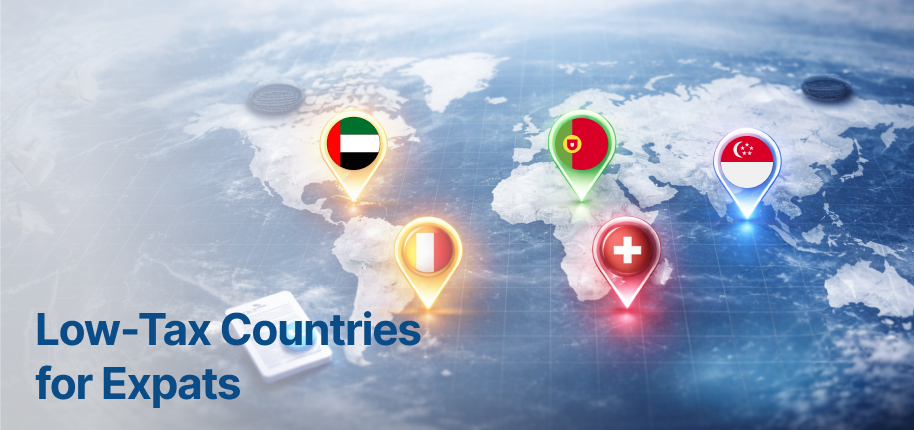
For entrepreneurs, digital nomads, and internationally mobile professionals, choosing where to live can significantly affect personal wealth and financial planning. Many expats also explore investment-based residency programs. Our guide on Residency Through Investment in Europe explains how entrepreneurs and investors can secure legal residence while benefiting from favourable tax environments.
Relocating to a tax-friendly jurisdiction can reduce income tax, capital gains tax, or wealth taxes while also offering high quality of life and global connectivity. However, tax residency rules, visa programs, and local regulations vary widely. Understanding which countries provide legitimate tax advantages is essential before making relocation decisions. This guide explores the best low tax countries for expats in 2026, the benefits they offer, and what international professionals should consider before moving.
Why Expats Look for Low-Tax Countries?
Expats often relocate to jurisdictions with favourable tax systems for several reasons. Tax efficiency can significantly impact savings, investment returns, and overall financial flexibility. Some of the main motivations include
- Lower personal income tax rates
- Tax exemptions on foreign income
- Attractive residency programs
- Business-friendly regulatory environments
- Higher disposable income and wealth accumulation
For remote professionals and international entrepreneurs, choosing one of the low-tax countries for expats can also simplify global financial planning.
Key Factors to Consider Before Relocating
Before moving to a tax-friendly jurisdiction, expats should evaluate several important factors beyond headline tax rates.
-
Tax Residency Rules
Most countries tax residents differently from non-residents. Residency is often triggered by spending 183 days or more in the country each year. However, additional factors, such as permanent home, economic ties, and the centre of vital interests, may also influence tax residency status.
-
Double Tax Treaties
Double taxation agreements (DTAs) help prevent individuals from being taxed twice on the same income. They also clarify which country has the primary right to tax specific types of income, such as salaries, dividends, or capital gains.
-
Visa and Residency Programs
Many low-tax countries offer special visas for entrepreneurs, investors, or remote workers. These programs often provide faster residency pathways and can include tax incentives for new residents.
-
Cost of Living and Lifestyle
Low taxes may not always translate to lower living costs. Some tax-friendly destinations also have high housing and lifestyle expenses. Expats should evaluate overall living expenses, healthcare access, and quality of life before choosing a relocation destination.
-
Global Business Environment
For business owners, infrastructure, banking access, and legal stability matter as much as tax advantages. A strong business environment can make it easier to scale operations, access international markets, and manage cross-border financial activities.
Best Low-Tax Countries for Expats in 2026
Some jurisdictions offer unique tax systems, such as Estonia’s model, where companies pay 0% corporate tax on retained profits, making it attractive for internationally mobile entrepreneurs.
-
United Arab Emirates
The UAE remains one of the most attractive destinations for expats due to its zero personal income tax policy. Key advantages include
- No personal income tax
- Strong international business infrastructure
- Golden Visa and investor residency options
- Global financial hub (Dubai and Abu Dhabi)
However, corporate tax was introduced in 2023 for certain business activities, though many free zone businesses still enjoy tax benefits. The applicability of tax depends on business structure, activity type, and whether the company qualifies under free zone regulations.
-
Portugal
Portugal continues to attract expats through its Non-Habitual Resident (NHR) tax regime, although updates have been introduced in recent years. Benefits include
- Reduced tax rates on foreign income
- Attractive lifestyle and climate
- Strong expat communities
- Access to EU residency benefits
Portugal remains one of the most attractive low-tax countries for expats seeking both tax efficiency and quality of life. Its combination of favourable tax regimes, lifestyle benefits, and EU access continues to make it a top relocation choice.
-
Singapore
Singapore offers a competitive tax system with relatively low personal income tax rates and strong economic stability. Advantages include
- Progressive tax system with moderate rates
- No capital gains tax
- Strong financial infrastructure
- Major international business hub
Singapore is particularly attractive for entrepreneurs and professionals working in finance, technology, and global trade. Its stable regulatory environment and strong global connectivity make it an ideal base for international business operations.
-
Switzerland
Although Switzerland is not always considered a low-tax country overall, certain cantons offer favourable tax arrangements for expats. Benefits include
- Attractive lump-sum taxation programs in some regions
- High economic stability
- Strong banking and financial services sector
- Exceptional quality of life
Switzerland remains a popular choice for high-net-worth individuals. Switzerland remains a popular choice for high-net-worth individuals. Its favourable tax regimes in certain cantons, combined with strong privacy laws and financial stability, enhance its global appeal.
-
Malta
Malta offers tax incentives designed specifically for expatriates and international businesses. Key benefits include
- Remittance-based taxation system
- Attractive residency programs
- English widely spoken
- Access to the EU market
Malta’s tax structure can be particularly beneficial for individuals earning income outside the country. This is due to its remittance-based system, where foreign income is only taxed if brought into Malta.
Comparison of the Best Low-Tax Countries for Expats in 2026
| Country | Personal Income Tax | Residency Options | Key Benefit |
| UAE | 0% personal income tax | Golden Visa, investor visas | Tax-free personal income |
| Portugal | Reduced tax under NHR | Residency & EU access | Lifestyle + tax incentives |
| Singapore | Progressive (low rates) | Employment Pass | Strong financial hub |
| Switzerland | Varies by canton | Residency permits | Wealth-friendly tax structures |
| Malta | Remittance-based taxation | Residency & citizenship programs | EU access with tax advantages |
Popular Tax Residency Programs for Expats
Several countries actively attract foreign residents through dedicated residency programs. These initiatives are designed to encourage investment, attract skilled professionals, and stimulate economic growth while offering tax advantages to new residents.
-
Digital Nomad Visas
Many countries now offer visas specifically designed for remote workers. These visas allow professionals to live and work legally in a country while working for foreign employers or clients, often with favourable tax treatment.
-
Investor and Entrepreneur Visas
Entrepreneurs and investors can often obtain residency through business investment programs. These programs typically require establishing a company, creating jobs, or making a qualifying financial investment in the host country.
-
Retirement Residency Schemes
Certain countries provide favourable tax treatment for retirees relocating from abroad. These programs make it easier for expats to legally establish tax residency in low-tax countries.
Tax Planning Considerations for Expats
Relocating to a low-tax jurisdiction requires careful tax planning to avoid unexpected liabilities. Key considerations include:
-
Exit Tax From Home Country
Some countries impose exit taxes when individuals relocate permanently. These taxes may apply to unrealised capital gains on assets when a person changes tax residency.
-
Worldwide Income Taxation
Countries such as the United States tax citizens regardless of residency. This means individuals may still have reporting and tax obligations in their home country even after relocating abroad.
-
Substance Requirements
To qualify for tax residency, expats may need to demonstrate genuine presence and economic activity. This often includes spending a minimum number of days in the country, maintaining a local address, or showing business or employment ties.
-
Banking and Financial Compliance
International reporting requirements such as CRS (Common Reporting Standard) can affect global financial transparency. Proper tax advice is essential before moving to one of the low-tax countries for expats.
Benefits of Living in Tax-Friendly Countries
Careful planning and jurisdiction selection can significantly impact long-term financial outcomes for expats. Understanding both tax benefits and regulatory requirements ensures a smoother and more sustainable relocation strategy.Relocating to a tax-efficient jurisdiction can offer several advantages. These include
- Higher net income
- Improved wealth accumulation
- Greater financial flexibility
- International lifestyle opportunities
- Access to global business markets
For entrepreneurs and remote professionals, choosing among the low-tax countries for expats can significantly enhance both lifestyle and financial outcomes. It allows individuals to optimise income retention while benefiting from global mobility and business opportunities. With the right strategy, expats can align their personal and professional goals within a tax-efficient international framework.
How UCI Supports Global Relocation and Business Expansion?
Choosing the right country for tax residency or international business expansion requires strategic planning. UCI supports entrepreneurs, investors, and expats with comprehensive global expansion services. These include
- International company formation
- Tax residency planning
- Immigration and residency support
- Corporate structuring for tax efficiency
- Bank account opening assistance
- Legal and compliance advisory
By combining tax planning with international corporate structuring, UCI helps clients relocate and operate in low-tax countries for expats while remaining fully compliant with global regulations.
Conclusion
In 2026, several jurisdictions continue to stand out as low-tax countries for expats, offering favourable tax regimes, attractive residency programs, and a high quality of life. Destinations such as the UAE, Portugal, Singapore, Switzerland, and Malta remain among the most popular options for internationally mobile professionals. However, tax rates alone should not determine relocation decisions. Residency rules, double tax treaties, cost of living, and business infrastructure all play critical roles in determining whether a jurisdiction is suitable. With proper planning and professional guidance, expats can structure their relocation to optimise tax efficiency while supporting long-term financial and business goals. UCI helps individuals and businesses navigate global relocation strategies, ensuring they choose the right jurisdiction for sustainable international growth.